News
Power Space tailor-made dust removal plan for you
Air-Clean Tower: Revolutionizing Fume Extraction in Complex Welding Shops
Introduction
Large welding facilities face unique challenges in fume management that traditional extraction systems cannot adequately address. This case study explores how an innovative air-clean tower solution transformed a complex welding shop's air quality using advanced fume extraction clean tower technology. The implemented fume extraction system demonstrates how modern approaches can overcome even the most challenging industrial environments.
Case Study: Complex Welding Facility Overview
Facility Specifications
Total area: 12,000 square feet welding shop
Layout complexity: Multiple work zones with varying ceiling heights
Welding types: MIG, TIG, and stick welding operations
Workstation arrangement: 40+ fixed stations with mobile operations
Challenge: Traditional ducting impossible due to overhead cranes and infrastructure
Air Quality Challenges
Widespread contamination: Fumes spread throughout facility
Worker health concerns: Multiple respiratory complaints
Regulatory compliance: OSHA violations documented
Production impacts: Frequent work stoppages for air quality issues
Traditional System Limitations
Failed Approaches
Centralized Duct Systems
Installation interfered with crane operations
Insufficient coverage for facility size
High energy consumption
Individual Station Units
Inconsistent air quality between stations
Maintenance management challenges
Higher overall operating costs
General Ventilation
Ineffective for fume containment
High energy costs for minimal benefit
Unable to meet OSHA requirements
Innovative Solution: Air-Clean Tower Deployment
Design Philosophy
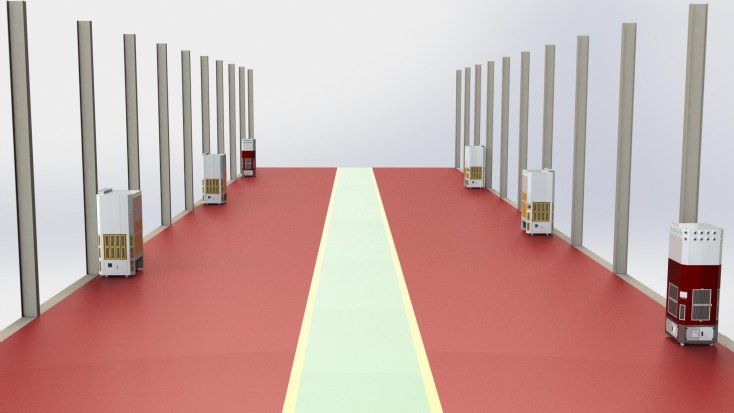
The solution combined fixed air-clean tower units with mobile collectors:
Strategic placement: Based on computational fluid dynamics analysis
Zoned approach: Different models for different area requirements
Mobile support: Flexible units for variable work locations
Technical Implementation
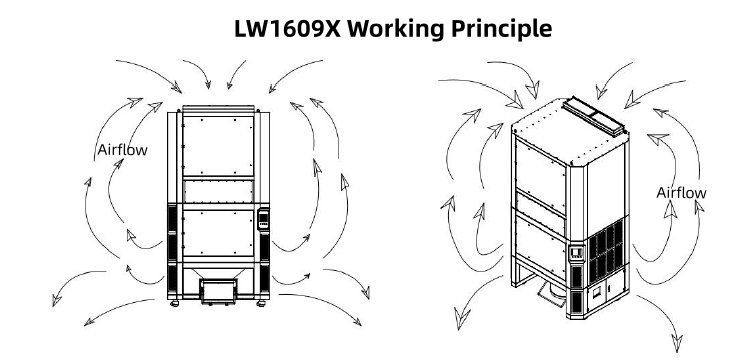
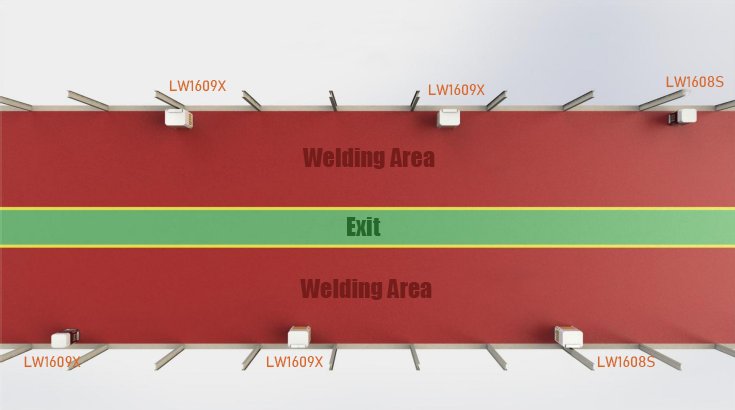
6 self-circulating units deployed throughout facility
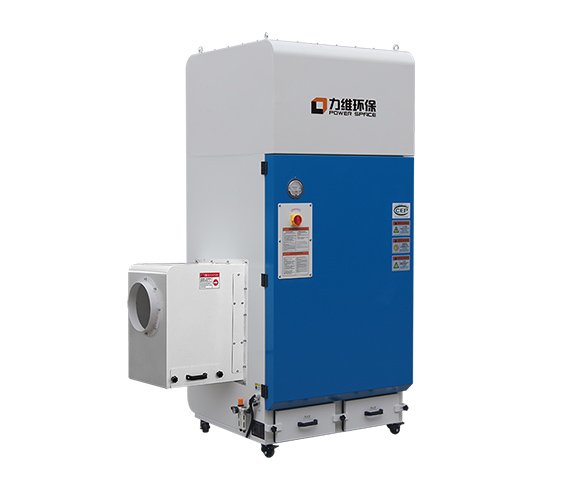
4 × LW-E-1609X units: High-capacity coverage for main welding areas
2 × LW-C-1608S units: Specialized units for finishing areas
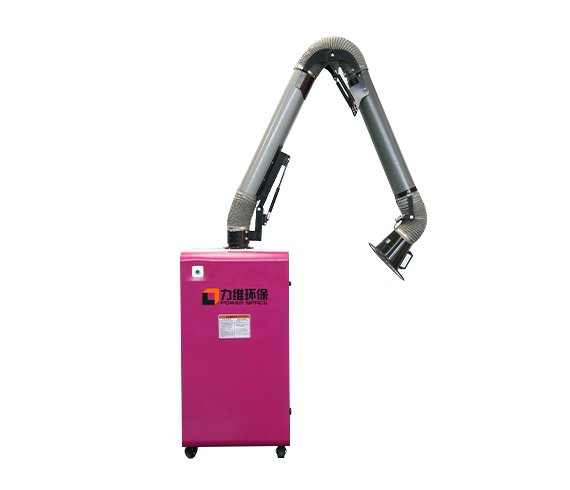
Mobile units: LW-C-M1201 for flexible support where needed
Equipment Configuration & Placement
Fixed Tower Placement Strategy
| Location | Model | Coverage Area | Special Features |
|---|---|---|---|
| Main welding bay | LW-E-1609X | 3,000 ft² | High-capacity filtration |
| Secondary bay | LW-E-1609X | 2,500 ft² | Enhanced spark protection |
| Finishing area | LW-C-1608S | 1,800 ft² | Fine particulate control |
| Quality control | LW-C-1608S | 1,200 ft² | Ultra-clean air output |
Mobile Unit Deployment
3 × LW-C-M1201 mobile units
Flexible positioning: Follows project requirements
Quick connectivity: Instant operation where needed
Backup capability: Supports fixed units during maintenance
Performance Results & Benefits
Air Quality Improvements
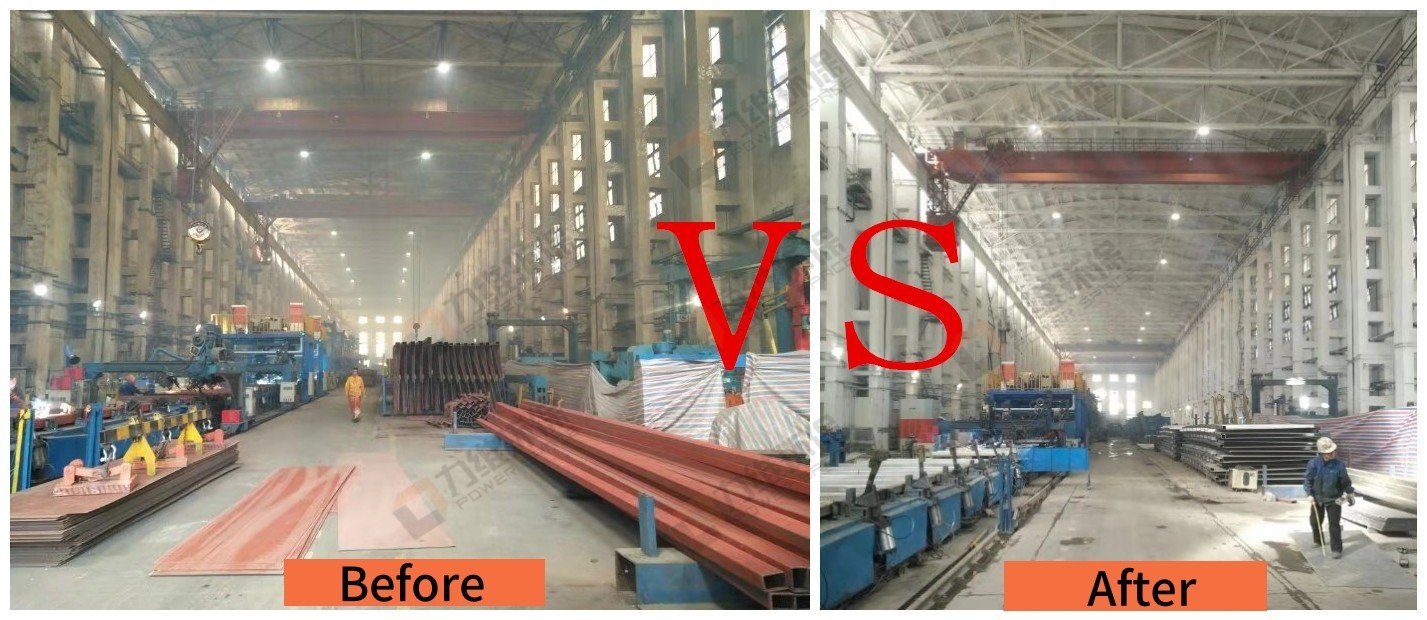
95% reduction in airborne particulates
OSHA compliance achieved within 30 days
Worker satisfaction dramatically improved
No more production delays due to air quality
Operational Benefits
40% reduction in energy costs vs. traditional system
Minimal maintenance requirements
No interference with existing infrastructure
Scalable solution for future expansion
Financial Impact
Return on investment: 14 months
Maintenance cost reduction: 60%
Insurance premium reduction: 25%
Productivity improvement: 18%
The Future: LW16 Series Fume Extraction Tower
Advanced Technology Features
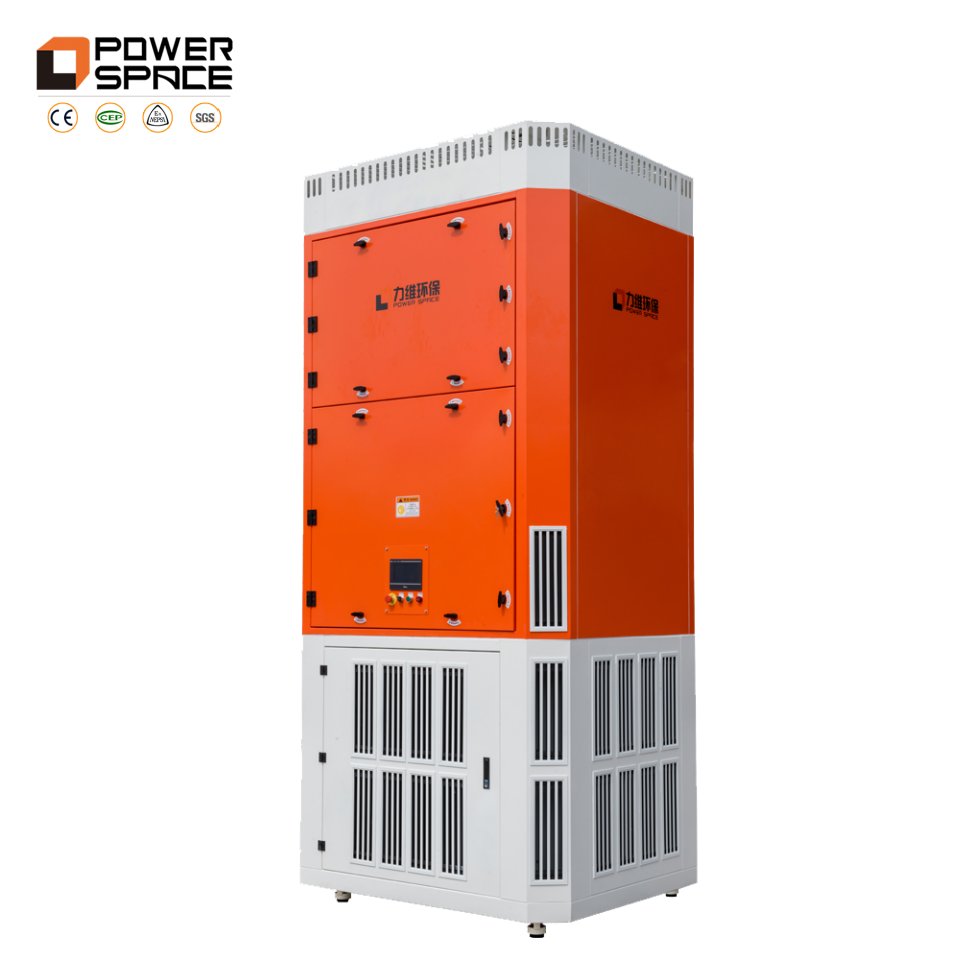
Power Space's latest LW16 series fume extraction tower incorporates:
Self-developed control system: Intelligent airflow management
Dual-mode operation: Combination units create effective air circulation patterns
Enhanced filtration: 99.97% efficiency at 0.3 microns
Smart monitoring: Real-time performance optimization
Key Advantages
30% faster contamination removal than previous models
20% energy reduction through smart cycling
Remote monitoring and predictive maintenance
Adaptive operation based on real-time air quality
Expert Consultation Available: Click here to connect with our engineering team for a custom facility assessment and solution design.
Conclusion
This case study demonstrates how modern air-clean tower technology can solve even the most challenging welding fume extraction problems. The implemented fume extraction clean tower system provided comprehensive coverage without disrupting existing operations, while the fume extraction system overall delivered exceptional air quality improvements and operational benefits. For facilities facing similar challenges, the LW16 series fume extraction tower represents the next evolution in industrial air cleaning technology.
Next Step: Contact Power Space for a comprehensive facility assessment and customized fume extraction system design tailored to your specific requirements.
FAQ About Fume Extraction Towers
Q: What power ratings and filter cartridge configurations are available for these fume extraction towers?
A: The 16 Series Industrial air filtration tower systems offer flexible configurations to match different workshop sizes and air purification demands:
Power Ratings: Available in 4 kW, 7.5 kW, 11 kW, and 15 kW motor options
. Filter Cartridges: Configurations can be tailored with 2, 4, 6, 8, or 9 filter cartridges depending on the specific airflow and filtration area required
.
Q: What working conditions and applications are self-circulating fume extraction towers best suited for?
A: These ductless fume extraction towers are specifically engineered for complex, heavy-duty industrial environments, including:
Large & Heavy Workpieces: Ideal for shops handling oversized or irregularly shaped metal parts moved by overhead cranes, where overhead ductwork is impractical or impossible to install
. Dynamic & Variable Workstations: Perfect for facilities with non-fixed welding stations, shifting production lines, or frequent layout changes
. High Heat & Heavy Consumption: Suitable for workshops with high thermal loads, heavy welding consumable usage, and strict requirements for maintaining indoor temperature and humidity
.
Q: What are the key advantages of ductless industrial filtration and ventilation equipment over central ducted systems?
A: Compared to traditional ducted ventilation setups, an Industrial Welding Fume Extraction System based on self-circulating tower architecture delivers several distinct operational advantages:
Easy Installation & Mobility: Plug-and-play design requiring only power and compressed air connections
. No expensive overhead ductwork installation is needed, making relocation fast and cost-effective . Energy Savings & Climate Control: Recirculates purified air back into the facility without altering indoor temperature or humidity, significantly reducing HVAC heating/cooling costs
. Automated Pulse-Jet Cleaning: Features an automatic reverse pulse-jet system to clean filter cartridges on the fly, ensuring low ongoing operational costs
. Wide Air Coverage: A single self-circulating tower unit effectively captures and purifies airborne fumes within a coverage area of up to 300 m³
.
Q: How do I troubleshoot pulse-jet cleaning issues if the automatic blowback stops working?
A: If your tower's pulse-jet cleaning system suddenly stops functioning, inspect the following key components:
Air Supply Pressure: Check if the compressed air supply is normal and maintains a minimum pressure of 0.5 MPa
. Pulse Valve & Air Tank: Inspect the pulse valve for damage or foreign debris preventing complete closure, which can cause air tank leakage
. Also check the oil-water separator at the bottom inlet for air leaks . Control Board & Fuse: Verify that the pulse controller is functioning correctly and check for blown fuses that may prevent solenoid valve activation
.
Q: What should I check if dust or ash is escaping from the air outlet?
A: If you notice dust exiting the clean air outlet of your filtration and ventilation equipment, perform a step-by-step diagnostic check:
Filter Cartridge Integrity: Inspect for torn, worn, or incorrectly seated filter cartridges
. Internal Sheet Metal Welds: Check for broken internal welds between the clean-air chamber and the air passage channels
. Internal Sealants: Verify if the internal sealant strips have degraded, peeled off, or dislodged over time
.
Q: What safety precautions must be followed during daily operation?
A: To ensure operator safety and extend system lifespan, strictly observe the following operational guidelines:
No Trash or Cigarettes: Never throw plastic bags, workshop garbage, or lit cigarette butts into the air intake or dust hopper
. Debris causes filter clogging and blower burnout, while burning embers pose a severe fire hazard inside the cartridge chamber . Regulate Cleaning Pressure: Keep the pulse blowback pressure under 0.8 MPa to prevent premature wear on filter media and solenoid valves
. Avoid Hot Work Directly Above: Do not perform open-flame hot work (such as grinding or cutting) directly above the unit's top air intake to prevent sparks from entering the filter chamber
. Electrical & Maintenance Safety: Never place liquids or flammable materials on top of the cabinet or electrical box
. Always disconnect main power before opening maintenance doors .
Need Help Selecting the Right Air Cleaning Tower for Your Shop?
Every manufacturing plant has unique airflow dynamics and workspace constraints. Whether you need a 4kW compact unit or a multi-tower 15kW installation, our clean-air engineers are ready to assist with sizing, coverage calculations, and custom voltage configurations.
→ Explore Full Specifications & Get a Tailored Quote for Tower Systems