News
Power Space tailor-made dust removal plan for you
Designing a High-Efficiency Industrial Fume Extraction System for Mixed Welding & Grinding Workshops
In modern industrial manufacturing, air quality is not just a regulatory requirement—it is a cornerstone of operational efficiency and employee health. For facilities managing complex workflows that combine manual welding, automated robotic welding, and grinding, a standard "off-the-shelf" fan is insufficient.
This article details a real-world case study of a comprehensive fume extraction system designed for a heavy-duty workshop. We will analyze the engineering logic behind handling diverse pollution sources—from Argon Arc welding to heavy grinding dust—using a centralized Industrial Fume Extractor solution equipped with intelligent controls.
The Challenge: A Complex Pollution Environment
According to the project data provided, the target facility presented a multi-faceted challenge. The workshop required a unified air filtration solution for 13 distinct work stations:
10 Manual Welding Stations: Generating fine metallic fumes.
1 Automatic Welding Station: High-intensity fume generation requiring constant extraction.
2 Grinding Stations: Producing heavy, abrasive dust particles that differ significantly from welding smoke.
The primary goal was to design a system that guarantees 99.8% filtration efficiency while minimizing energy consumption and maintaining a consistent airflow across a long ductwork span.

The Solution: A Centralized Industrial Fume Extractor Architecture
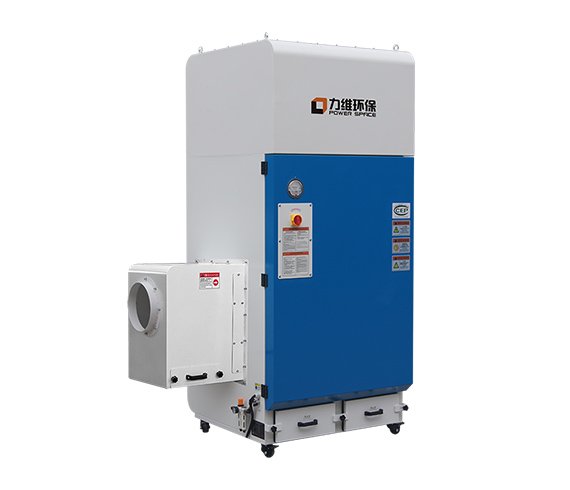
To handle the high volume of air required for 13 stations, the engineers selected a centralized architecture rather than individual portable units. The core of this solution involves three units of LW-E-1116EX modular dust collectors.
1. Source Capture Strategy
Efficiency in a fume extraction system begins at the capture point. If the fumes are not captured immediately, the energy required to clean the ambient air increases exponentially. This project utilized three distinct capture methods tailored to the specific process:
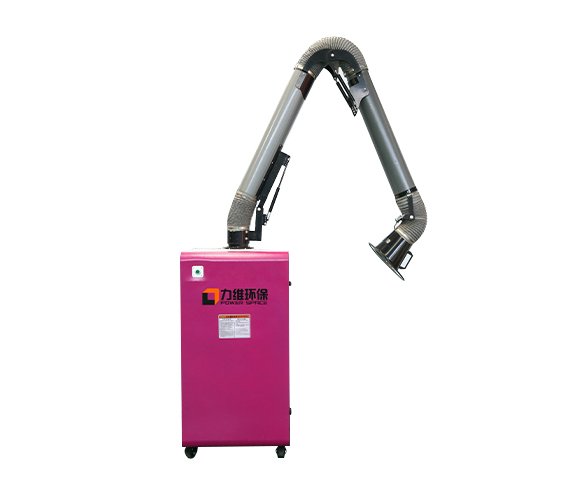
Flexible Suction Arms (Source Capture): For the 6 standard manual welding stations, 3-meter flexible arms were installed. These allow welders to position the hood directly over the arc, capturing fumes before they enter the breathing zone.
Enclosed Hoods with Curtains: For the 4 heavier welding stations, rotating suction hoods surrounded by hanging soft curtains were used. This semi-enclosed design creates a negative pressure zone, drastically reducing the fume escape rate.
Side-Draft Hoods: For the 2 grinding stations, side-draft hoods with baffles were implemented. Grinding dust has high kinetic energy; baffles stop the heavy particles, allowing the suction to capture the fine dust effectively.
Top Suction (Robotic): The automated workstation utilizes a top-mounted suction port connected directly to the main duct, ensuring continuous extraction during the robot's operation cycle.

2. The Powerhouse: LW-E-1116EX Configuration
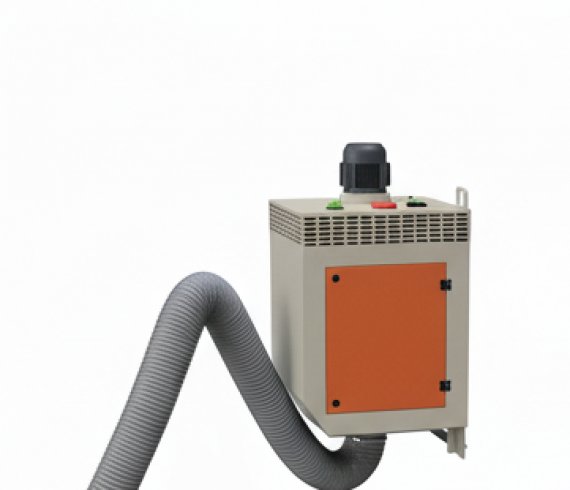
The selected Industrial Fume Extractor(Model LW-E-1116EX) is a high-performance cartridge collector. By utilizing three units in parallel, the system ensures a massive filter surface area. This lowers the "air-to-cloth" ratio, which prevents the filters from clogging prematurely and extends the lifespan of the filter cartridges.

The Brain of the Operation: Intelligent Control System
A modern industrial fume extractor is defined by its control system. Based on the technical specifications provided, this system features a state-of-the-art PLC (Programmable Logic Controller) with specific features designed to optimize cost and safety.
Key Features of the Intelligent Control System:
VFD (Variable Frequency Drive) Integration: The system does not always need to run at 100% power. The VFD allows the fan speed to adjust based on the number of active workstations. If only 5 welders are working, the fan slows down. This "Four-Gear Adjustment" capability can reduce energy consumption by up to 40%.
Automated Pulse-Jet Cleaning: As dust accumulates on the filter cartridges, the differential pressure rises. The system utilizes a pressure transmitter to detect this. Once a threshold is reached, it triggers a pulse of compressed air to "blow down" the filters. Uniquely, this system performs a sequential self-cleaning cycle after the fan shuts down, ensuring the filters are pristine for the next shift.
Safety & Spark Detection: Grinding and welding generate sparks. To prevent fires within the dust collector, the system monitors particulate concentration and temperature. If anomalies are detected, the system can trigger alarms or shut down to protect the facility.
Project Data Breakdown
The following table summarizes the configuration used in this successful case study. This data highlights how different capture methods are matched to specific industrial processes.
Table 1: Project Configuration & Equipment Selection
Treatment Zone | Quantity | Process Type | Dust Removal | Main Equipment Model |
| Manual Welding | 6 stations | Arc Welding | 3-Meter Flexible Suction Arm | LW-E-1116EX |
| Manual Welding | 4 stations | Arc Welding | Rotating Suction Hood Hanging Soft Curtains | |
| Gringding Area | 2 stations | Metal Grinding | Side-Draft Hood with Side Baffles | |
| Robot Station | 1 station | Auto Welding | Top Suction Port connected to Duct |
Why This System Design Maximizes ROI
Investing in a centralized fume extraction system of this magnitude is a significant capital expenditure, but the Return on Investment (ROI) is realized through three main avenues:
Energy Savings: By utilizing the PLC and VFD to modulate fan speed based on active dampers, the facility avoids wasting electricity on stations that are not in use.
Consumable Longevity: The combination of a large filter surface area (via the 3x LW-E-1116EX units) and the intelligent offline cleaning cycle ensures that filter cartridges last significantly longer, reducing replacement costs.
Regulatory Compliance: With effective source capture and high-efficiency filtration, the facility meets strict environmental impact assessment (EIA) standards, avoiding fines and potential shutdowns.
Conclusion
This case study demonstrates that a "one-size-fits-all" fan is never the answer for complex industrial environments. By analyzing the specific needs of manual welding, robotic welding, and grinding, and by implementing an Industrial Fume Extractor with intelligent VFD controls, manufacturers can achieve a clean, safe, and energy-efficient workshop.
If your facility faces similar challenges with mixed pollution sources, consider a centralized approach. Prioritizing intelligent control systems and proper source capture designs will ensure your fume extraction system delivers clean air for years to come.