News
Power Space tailor-made dust removal plan for you
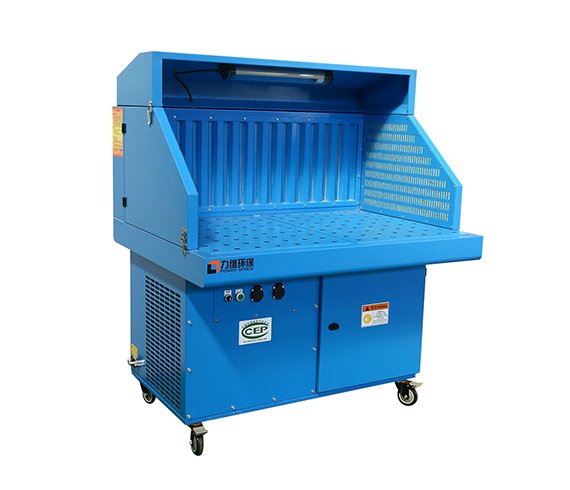
FAQ: Choosing Your Downdraft Grinding Table
Managing metal dust and welding fumes is essential for maintaining workplace safety and operational efficiency. A high-performance downdraft table serves as an all-in-one solution for dust extraction, surface finishing, and worker protection.
To help you choose, operate, and maintain the right equipment, we have answered the most common questions regarding industrial downdraft bench selection and troubleshooting.

1. Applications & Working Conditions
Q: What working conditions is a grinding downdraft table suitable for?
A: An industrial downdraft grinding table is highly versatile and designed for two main applications:
Metal & Putty Dust Grinding: Captures airborne dust produced during manual or mechanical grinding and sanding
. Dust particles are drawn in through the tabletop or backdraft panel to purify the air effectively . Manual Welding Fume Extraction: Collects toxic heavy metal fumes and welding smoke generated by MMA, MIG/MAG (CO2), TIG, and laser welding processes
.
2. Models, Power & Technical Specifications
Q: What power options are available for the LW14 Series grinding downdraft table?
A: The LW14 Series grinding table offers motor options in 3 kW and 5.5 kW to suit different airflow requirements and workload intensities
Q: How many filter cartridges are used in the LW14 Series downdraft bench?
A: Depending on the exact model configuration, the LW14 Series comes equipped with either 1 filter cartridge or 2 filter cartridges to ensure optimal filtration area and air purification
Q: Can the downdraft table run on single-phase power, or is three-phase power required?
A: Models rated at 3 kW or below can operate on single-phase power
Q: Can the equipment be customized for different international voltages and frequencies?
A: Yes. Since different countries require custom motors, electrical components, or transformers, we offer full electrical customization
3. Equipment Maintenance & Troubleshooting
Q: How do I troubleshoot an electric leakage on the dust collector?
A: If electric leakage occurs, inspect the following three areas immediately:
Verify that the main power supply is properly grounded
. Ensure the 5-wire three-phase power cable is correctly connected
. Check all electrical wiring and cables for physical damage or wear
.
Q: Why has the suction force decreased over time, and how can I fix it?
A: Reduced suction efficiency is usually caused by one of four common issues:
Clogged Filters: Check if the filter cartridges are clogged
. Clean them manually or replace them with new filter elements . Impeller Rotation: On non-standard 380V equipment without a phase sequence protector, check if the impeller is rotating in the wrong direction
. Air Leaks: Inspect the dust hopper, access doors, and duct connections for air leaks
. Capacity Mismatch: Re-evaluate whether the unit's airflow capacity matches your actual onsite operating demands
.
Ready to Upgrade Your Workshop Air Quality?
Finding the right grinding downdraft table depends on your specific workpiece size, dust type, and power requirements. Whether you need a standard 3kW single-cartridge unit or a customized multi-phase solution, our engineering team is here to help.
Explore Full Specifications & Get a Quote on LW14 Series Downdraft Table