News
Power Space tailor-made dust removal plan for you
Maintenance & FAQ for Fume Extraction Towers
What is the standard maintenance procedure for an industrial welding fume extraction tower?
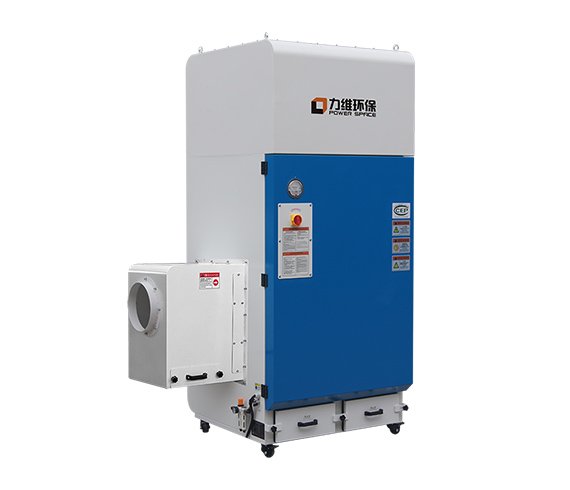
To keep a ductless fume extraction tower operating at peak facility-wide cleaning efficiency, maintenance must focus on monitoring the differential pressure gauge daily, checking the compressed air purge pressure (0.5 - 0.6MPa), and emptying the lower dust collection bins every 10 to 15 days. When the internal resistance across the PTFE membrane filter cartridges approaches 1500 Pa, the automatic reverse pulse-jet system must be active to shed surface dust cake. Consistent adherence to these protocols ensures a stable 99.9% ambient purification rate, maintains the layer-displacement air circulation loop, and extends filter lifespans to over two years.
1. Core Maintenance Pillars for Ambient Air Purification Towers
Unlike localized portable extractors, an industrial dust collection tower manages massive volumes of air (10000m3/h+Framework). Keeping its internal components calibrated is vital for continuous workshop compliance.
Daily Diagnostic: Differential Pressure Monitoring
Every Power Space tower features an integrated control panel displaying real-time differential pressure (pressure drop).
Normal Operation (<1000Pa): Filters are clean; air displacement velocities are optimal.
Pulse Threshold (1000Pa - 1500Pa): The dust cake is layering. Ensure the factory compressed air line is connected and pressurized to feed the automated cleaning cycles.
Saturation Level (>1800Pa): The filter pores are heavily loaded. If automated pulsing fails to bring the pressure down, a manual filter overhaul or full element replacement is required.
Weekly Check: Compressed Air & Solenoid Valves
The heart of the self-cleaning mechanism is the pulse system. Verify weekly that the air regulator reads between 0.5MPa and 0.6 MPa.
Ensure that the inline air-water separator is drained completely. Moisture in the compressed air will cause dry welding dust to turn into a thick paste on the PTFE cartridge surface, permanently ruining the filter media.
Every 10 to 15 Days: Dust Bucket Disposal
Slide open the lower maintenance doors to access the high-capacity dust collection bins.
Empty the accumulated fine metal oxides before they fill past 60% volume capacity. Overfilled bins can re-entrain dust back into the high-velocity airstream during a pulse dump.
2. Troubleshooting Matrix: Resolving Tower Airflow Drops
| Operational Symptom | Probable Cause | Recommended Engineering Action |
| Smoke Lingers in Upper Air Layer | Reduced face velocity at top intake grids due to clogged filters. | Check pressure gauge. Trigger an manual intensive pulse-jet cycle. Replace filters if pressure remains > 1800Pa. |
| Dust Discharging from Floor Grilles | Ruptured pleated media or faulty clean-side sealing gasket. | Access the clean air chamber. Inspect cartridges for physical tears or loose top-mounting locking clamps. |
| Weak Pulse-Jet Clack/Sound | Solenoid valve failure or low compressed air reserve. | Check electrical relay signals on the PLC board and verify the primary compressor line volume supply. |
| Excessive Base Shell Vibration | Fan impeller imbalance due to uneven dust accumulation on blades. | Shut down power, lock out/tag out, and inspect the high-efficiency centrifugal fan impeller. Clean off any crusting. |
3. FAQ: Maximizing Your Fume Extraction Tower
Q: How long do the filter cartridges inside a welding fume extraction tower typically last?
A: Under standard double-shift manufacturing conditions, genuine Power Space PTFE polyester membrane cartridges have an operational service life of 18 to 24 months, thanks to the continuous efficiency of the automated reverse-pulse system.
Q: Can we wash the tower's filters to reduce replacement costs?
A: Absolutely not. Water or solvent washing will dissolve the microscopic flame-retardant surface coating and cause the fine sub-micron pores to collapse. Only use dry, regulated compressed air for cartridge regeneration.
Q: Is a fume extraction tower capable of handling heavy oil-mist welding fumes?
A: If your workshop sprays heavy anti-spatter oils or welds components coated in thick rust-preventative lubricants, an auxiliary oil-mist pre-separator or oil-absorbing powder pre-coating system should be used. Pure oil mist will blind dry dust cartridges rapidly.