News
Power Space tailor-made dust removal plan for you
Why Is My Portable Fume Extractor Not Sucking? (Causes & Solutions)
Is your workshop suddenly filled with more smoke than usual? A drop in suction power in your portable fume extractor isn't just a technical nuisance—it's a health and safety risk.
When your extraction system underperforms, welding fumes, dust, and VOCs linger in the breathing zone. At Power Space, we've analyzed thousands of maintenance cases. Here are the top 5 reasons why your extractor has lost its "pull" and how to fix it fast.
Quick Checklist: 30-Second Self-Test
Before diving into the hardware, check these basics:
[ ] Is the power plug fully inserted?
[ ] Is the manual damper on the extraction arm fully open?
[ ] Is there a visible obstruction at the hood inlet?

1. Clogged Filters: The #1 Performance Killer
The most common cause of suction loss is a saturated filter. In a multi-stage system, different layers fail at different rates:
Pre-filter: Captures large particles. If this is caked with dust, air can't pass through.
HEPA Filter: High-efficiency filters trap microscopic sparks and smoke. Once the pores are blocked, suction drops significantly.
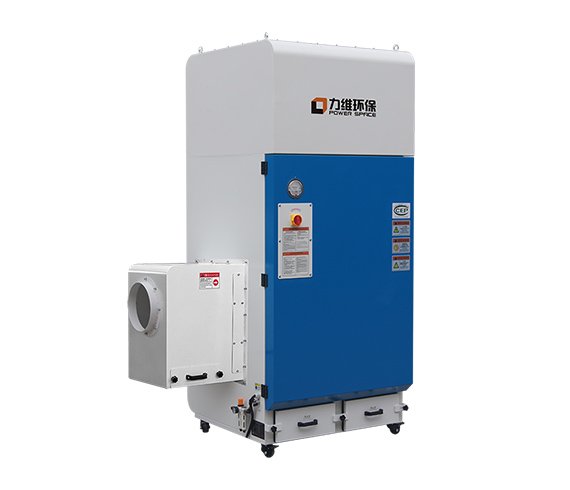
Solution: Check your pressure gauge. If it's in the "red zone," it's time to clean or replace the filters.

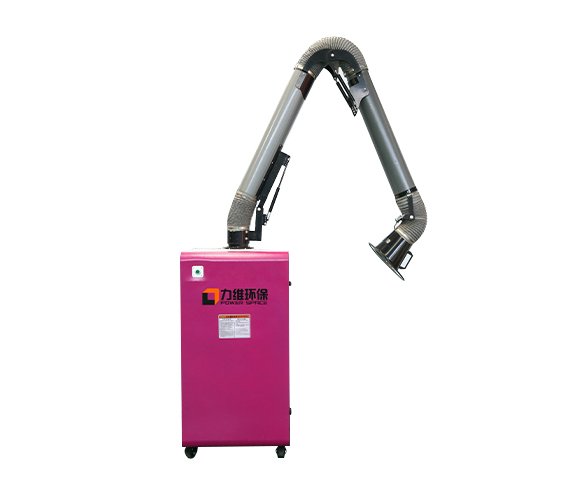
2. Blockages in the Extraction Arm or Hose
Portable extractors rely on flexible arms or hoses. Over time, heavy dust or external objects (like a stray rag or plastic wrap) can get sucked in.
The Issue: Kinks in the hose or internal buildup at the joints.
Solution: Fully extend the extraction arm and inspect the interior with a flashlight. Ensure the flexible joints aren't pinched.

3. Air Leaks in the Cabinet
An extractor works on negative pressure. If air leaks into the cabinet from anywhere except the suction inlet, the effective pull at the hood will drop.
The Issue: Worn-out rubber seals on the access door or a loose filter housing.
Solution: Inspect the door gaskets for cracks. Ensure all latches are tightly clamped after your last filter change.
4. Motor or Fan Direction Issues
If you've recently performed maintenance or moved to a new facility, the motor might be the culprit.
The Issue: On three-phase power systems, if the wiring is reversed, the fan will spin backward. It will still move some air, but with almost zero suction.
Solution: Observe the fan rotation direction (usually marked with an arrow on the motor housing). If it's wrong, have a qualified electrician swap the phases.
5. Improper Hood Positioning
Sometimes the machine is fine, but the "perceived" suction is low because of physics.
The Issue: The extraction hood is too far from the welding arc.
The Rule: To capture 99% of fumes, the hood should be placed at a distance no greater than 1 to 1.5 times the diameter of the duct.
Solution: Reposition the arm closer to the source. If the arm won't stay in place, tighten the friction joints.
Still Not Sucking? Let the Pros Help.
Continuous low suction can lead to motor overheating and premature equipment failure. If you've checked the filters and hoses but the performance hasn't returned, it might be time for a professional diagnostic or a system upgrade.
Contact Power Space Technical Support or Browse Our Replacement Filters to keep your air clean and your workshop safe.