News
Power Space tailor-made dust removal plan for you
Welding Room Ventilation: How to Control Welding Fumes and Improve Factory Air Quality
For factory managers and technical directors, choosing the right welding room ventilation solution is not simply about installing exhaust fans. It requires a clear understanding of welding processes, workshop layouts, fume generation points, production capacity, and air movement patterns.
This guide explains common welding ventilation challenges across different industries and introduces practical solutions, including centralized fume extraction systems and fume extraction towers.
Why Is Welding Room Ventilation Important in Industrial Facilities?
Welding produces airborne contaminants that can spread throughout a workshop. The type and concentration of pollutants depend on the welding process, base materials, filler metals, coatings, and operating conditions.
Common welding-related pollutants include:
Welding fumes: Fine airborne particles generated when metal and welding consumables are heated.
Metal oxides: Particles produced during the welding of steel, stainless steel, aluminum, and other metals.
Welding gases: Gases such as ozone and nitrogen oxides may be generated under certain welding conditions.
Heat and smoke: High-temperature welding operations can increase the thermal load inside the workshop.
Poor welding room ventilation can lead to several operational problems.
Common Welding Room Ventilation Challenges Across Different Industries
Different manufacturing industries have different welding processes, production layouts, and fume generation characteristics. A ventilation solution that works well for one workshop may not be suitable for another.
1. Heavy Metal Fabrication and Structural Steel Manufacturing
Heavy metal fabrication plants typically handle large steel structures, frames, pipes, and industrial components.
Common welding processes include:
MIG/MAG welding
Submerged arc welding
Manual metal arc welding
Multi-station structural welding
Main ventilation challenges:
Large workpieces require flexible production layouts. Welding operations may take place at multiple positions, and the distance between welding stations can change frequently.
Traditional fixed extraction hoods may not always reach the actual welding location. Meanwhile, general ventilation alone may not capture fumes before they spread throughout the workshop.
Recommended solution:
Combine local exhaust ventilation with a centralized or zoned fume extraction system.
For fixed welding stations, install suitable extraction arms or hoods close to the welding area. For large workshops with multiple welding zones, consider a centralized ducting system connected to an appropriately designed filtration unit.
A suitable system should be designed according to the number of active welding stations, required airflow, duct resistance, and production layout.
2. Automotive Manufacturing and Automotive Parts Production
Automotive factories and component manufacturers often operate multiple welding stations simultaneously.
Typical applications include:
Automotive chassis welding
Body frame welding
Metal bracket manufacturing
Exhaust system fabrication
Robotic welding production lines
Main ventilation challenges:
Automated production lines may generate welding fumes continuously. Several robots or welding stations may operate at the same time, creating a concentrated pollution source.
The extraction system must also avoid interfering with robot movement, workpiece transfer, and production automation.
Recommended solution:
Use integrated extraction hoods, robotic extraction systems, or dedicated extraction points around automated welding cells.
For facilities with multiple production lines, a zoned centralized extraction system can help manage different operating areas.
The ventilation design should consider simultaneous operating stations, robot movement, welding cycle times, and the required capture position.
3. Stainless Steel Processing and Precision Metal Manufacturing
Stainless steel fabrication is common in food processing equipment, chemical equipment, architectural metalwork, and industrial machinery manufacturing.
Typical processes include TIG welding, MIG welding, and precision manual welding.
Main ventilation challenges:
Stainless steel welding can generate fumes containing hazardous metal compounds, including chromium and nickel compounds, depending on the material and welding conditions.
Some precision welding operations also involve small components and restricted working spaces, making extraction hood positioning more difficult.
Recommended solution:
Prioritize source capture with appropriately positioned extraction arms, on-torch extraction, or dedicated extraction hoods.
Where several workstations operate in the same area, a properly designed centralized filtration system can provide a more organized approach to fume control.
Material composition and welding consumables should be considered when selecting filtration media and establishing maintenance procedures.
4. Shipbuilding, Heavy Equipment, and Large-Scale Welding Workshops
Shipyards and heavy equipment manufacturing plants often involve large workpieces, long welding seams, and changing production positions.
Main ventilation challenges:
Large working areas and high ceilings
Multiple welding operations across different zones
Frequent movement of workpieces
Difficult access to welding fume sources
Variable production schedules
In these environments, conventional wall-mounted fume extractor may not provide sufficient control at individual welding locations.

(Welding Room Ventilation Challenges Across Different Industries)
Recommended solution:
A combination of local fume extraction, mobile fume collectors, and strategically arranged general ventilation may be appropriate.
For large open workshops, a fume extraction tower can also be considered as part of an overall air management strategy.
The final configuration should be based on airflow distribution, contaminant generation, building height, and the location of active welding operations.
How to Choose the Right Welding Room Ventilation System
Selecting an appropriate ventilation system requires more than calculating the total workshop volume.
Factory managers and technical directors should evaluate the following factors before making an investment.
1. Identify the Welding Processes and Materials
Different welding processes generate different levels and types of airborne contaminants.
For example:
MIG/MAG welding may generate significant welding fume during continuous production.
TIG welding generally produces less visible particulate fume, but hazardous gases and metal-related contaminants may still require control.
Plasma cutting and related thermal processes may generate substantial smoke and fine particles.
Stainless steel welding requires careful consideration of material composition and exposure risks.
The ventilation system should match the actual processes and materials used in the factory.
2. Evaluate Workshop Size and Production Layout
Workshop dimensions, ceiling height, partition walls, and equipment positions all influence air movement.
A large workshop with multiple welding areas may require a different solution from a compact workshop with several fixed welding benches.
Before selecting equipment, identify:
Total workshop floor area
Ceiling height
Number of welding stations
Distance between welding areas
Fixed and mobile production equipment
Main worker movement routes
Existing ventilation and exhaust facilities
These details help engineers determine extraction locations, duct arrangements, and suitable equipment capacity.
3. Consider Simultaneous Welding Operations
The number of installed welding stations does not always equal the number of stations operating at the same time.
A factory with 20 welding stations may operate only 10 simultaneously during normal production. Another facility may run nearly all stations continuously.
This difference has a direct impact on system design.
Engineers should evaluate actual operating patterns, simultaneous demand, required capture airflow, and possible future production expansion.
4. Select the Appropriate Fume Filtration Technology
An effective welding room ventilation system should include suitable contaminant capture and filtration equipment.
Depending on the application, available solutions may include:
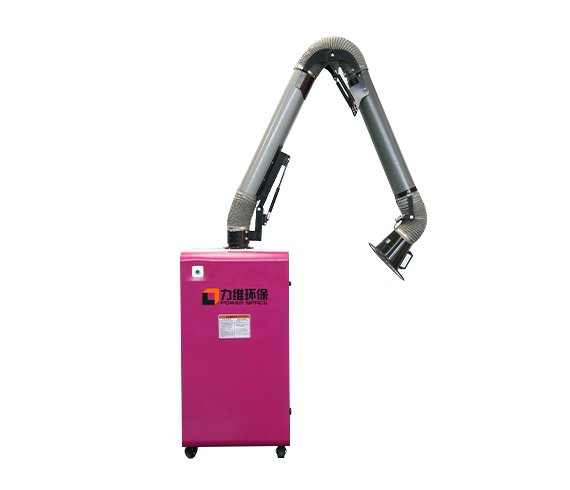
Mobile welding fume extractors
Fume Extraction arms and hoods
On-torch fume extraction systems
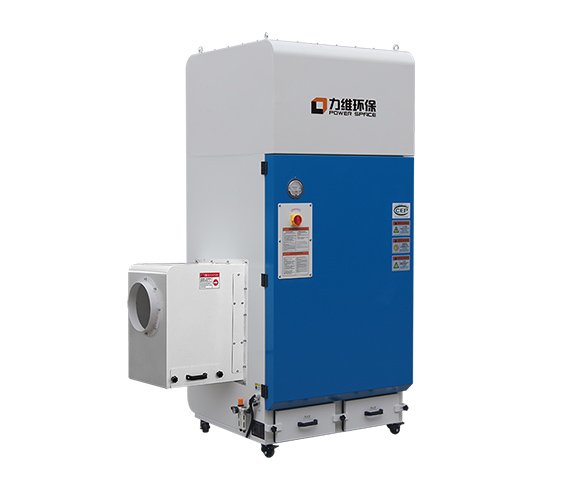
Centralized welding fume extraction systems
Fume extraction towers
Filter selection should consider particle characteristics, welding materials, operating temperature, dust loading, and cleaning requirements.
For combustible metal dust or other special hazards, additional risk assessments and suitable protective measures are essential.
5. Plan for Maintenance and Future Expansion
A ventilation system should remain effective throughout its service life.
Factory operators should consider filter replacement, cleaning access, fan maintenance, duct inspection, and system monitoring.
For expanding factories, modular or zoned system configurations may offer greater flexibility than a system designed only for current production needs.
Fume Extraction Tower: A Practical Solution for Large Welding Workshops
For large manufacturing facilities, welding room ventilation can be challenging when multiple welding operations are distributed across a wide workshop.
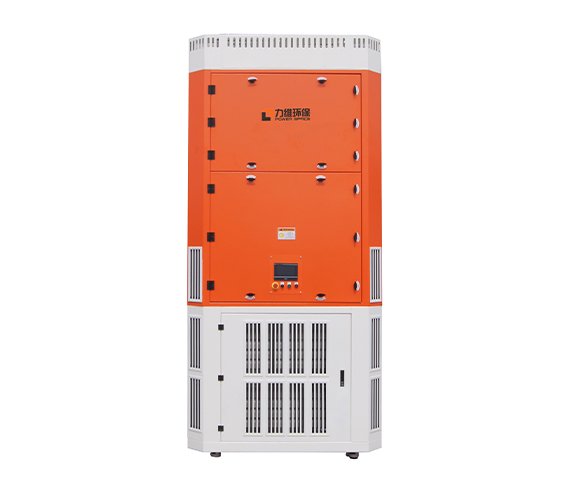
A Fume Extraction Tower is one option for managing airborne welding fumes in large industrial spaces.
Unlike conventional local extraction equipment that focuses on individual welding stations, a fume extraction tower can be designed to support broader workshop air management through strategically positioned air intake and filtration arrangements.
Depending on its configuration, it can be integrated into an industrial ventilation strategy to help manage airborne contaminants in selected workshop zones.

(Welding Room Ventilation: Fume Exctraction Air Clean Tower)
Key Applications of a Fume Extraction Tower
1. Large Open Welding Workshops
Large fabrication facilities often have high ceilings and widely distributed welding stations. A properly positioned extraction tower may help support air movement and contaminant collection in these open areas.
2. Multiple Welding Stations
When several welding operations take place across the same production area, a tower-based system may complement local extraction equipment and help address broader workshop air quality challenges.
3. Flexible Production Layouts
Some factories frequently change workpiece positions and production arrangements. A suitably designed tower solution may offer an alternative where installing extraction ducts at every welding point is difficult.
4. Workshops with Limited Ducting Options
In certain existing factories, extensive duct installation may be difficult because of structural restrictions, equipment interference, or limited installation space.
A suitable tower configuration may provide another option for improving overall fume management.
Why Combine a Fume Extraction Tower with Local Exhaust Ventilation?
It is important to understand that a fume extraction tower should not automatically replace source-capture equipment.
For welding operations that generate concentrated fumes, capturing contaminants close to the welding arc remains a key engineering priority.
A more effective strategy may combine:
Local extraction arms or welding hoods for individual stations
On-torch extraction for suitable manual welding applications
Centralized filtration for designated production zones
A fume extraction tower for broader workshop air management
General ventilation to support appropriate clean-air distribution
The combination depends on the workshop layout, contaminant generation, airflow requirements, and exposure assessment.
The objective is to prevent welding fumes from spreading into workers' breathing zones and other occupied areas.
Welding Room Ventilation: Technical Factors to Consider Before Installation
Before purchasing a ventilation system, factory managers should work with an experienced engineering team to review the following parameters.
| Selection Factor | Key Considerations |
|---|---|
| Workshop dimensions | Floor area, ceiling height, and building structure |
| Welding processes | MIG, MAG, TIG, robotic welding, and other processes |
| Welding materials | Carbon steel, stainless steel, aluminum, and coatings |
| Number of workstations | Installed stations and simultaneous operating stations |
| Fume generation | Welding duration, consumables, and production intensity |
| Airflow requirements | Capture velocity, extraction airflow, and system resistance |
| Filtration | Filter media, dust characteristics, and cleaning method |
| Installation | Ducting, equipment position, power supply, and maintenance access |
| Future expansion | Additional stations and changes in production capacity |
*Actual equipment specifications should be determined through engineering assessment rather than selecting a fan or filtration unit based only on workshop volume.
Local occupational safety, environmental, fire protection, and building requirements should also be reviewed before installation.
Conclusion: Build a More Effective Welding Room Ventilation System
Effective welding room ventilation is an important investment for factories that want to improve workplace air quality, control welding fumes, and maintain stable production conditions.
However, every workshop has different requirements. Heavy metal fabrication plants, automotive production lines, stainless steel processing facilities, and large shipbuilding workshops all need ventilation strategies suited to their specific welding processes and operating environments.
For many facilities, the most practical approach is to combine source-capture extraction, suitable filtration equipment, and well-planned general ventilation. In large open workshops, a properly engineered Fume Extraction Tower can also be considered as part of a comprehensive air management solution.
Power Space specializes in industrial welding fume extraction equipment and customized solutions for different manufacturing applications.
Looking for a suitable welding room ventilation solution for your factory?
Contact Power Space to discuss your workshop layout, welding processes, number of operating stations, and air quality requirements. Our team can help evaluate your application and recommend a suitable fume extraction configuration, including a Fume Extraction Tower where appropriate.