News
Power Space tailor-made dust removal plan for you
The Complete Guide to Plasma Fume Extraction
If you operate a CNC plasma table, you know that the process generates intense heat, brilliant light, and—most significantly—a massive volume of fine metal dust and hazardous fumes. Without a dedicated plasma table fume extractor, these airborne contaminants can quickly coat your equipment, ruin your cut quality, and pose serious health risks to your operators.
In this ultimate guide, we explore the technology behind plasma fume control, how to choose the right system for your CNC table, and maintenance secrets for maximum ROI.
What is a Plasma Fume Extractor?
A plasma fume extractor (also known as a plasma dust collector) is a high-volume filtration system designed to capture the heavy metallic dust and toxic gases produced during plasma cutting.
Unlike standard laser cutters, plasma cutting involves melting metal with an ionized gas stream, which creates larger particles and a higher concentration of ozone. While the physics differs slightly from laser processing, the goal remains the same. To understand how these industrial systems manage such high particle loads, you can explore the working principle of dust collectors which explains the multi-stage filtration process in detail.
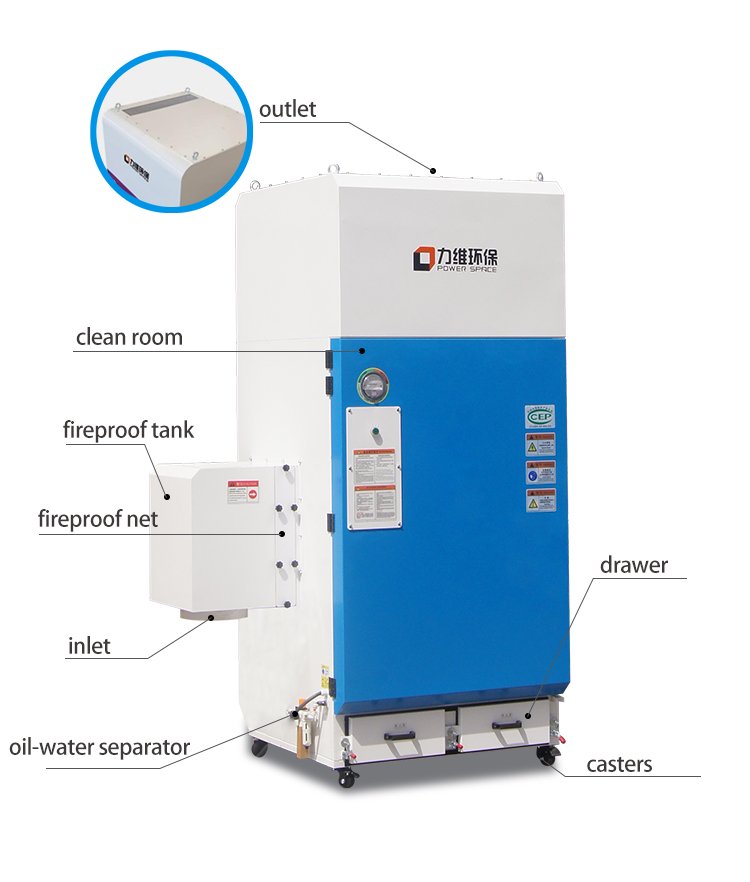
(parts of plasma table fume extractor)
How to Choose the Right Extractor for Your CNC Plasma
Selecting the right unit is not a "one size fits all" process. You must match the extractor's capacity to your table's size and the materials you cut.
Key Factors to Consider:
Airflow Volume: The larger your table, the higher the CFM required.
Filtration Media: Must be flame-retardant to handle hot plasma sparks.
System Scalability: For a comprehensive look at how these systems integrate into a full factory setup, refer to Three Primary Types of Fume Extraction Solutions which shares many structural similarities with plasma setups.

(Key Factors of selecting Plsama Table Fume Extractor)
Maintenance: Keeping Your Suction at Peak Performance
A plasma fume extractor is a significant investment. To ensure it lasts for years, you must follow a strict maintenance schedule.
Common Issues & Solutions:
Loss of Suction: If you notice your system is struggling to capture smoke, it is often due to blocked hoses or full dust bins. Our Q&A help you fix these issues instantly.
Filter Life: Don't wait for a total system failure. Consistent monitoring is the core of any professional maintenance plan. Follow our proven maintenance guide for industrial dust collectors to extend your filter life by up to 30%.
Integrating Extraction with Your Workflow
Modern CNC plasma setups are most efficient when the extractor is "synced" with the table.
Automatic Start/Stop: Many Power Space extractors can be linked to your CNC controller to save energy.
Zoned Downdraft Tables: For very large tables, we recommend "zoned" extraction, where suction is only applied to the area where the torch is currently cutting.

(Close-up of Plasma Fume Extractor ducting integrated with a CNC cutting table)
Conclusion: Clean Air is Good Business
Whether you are cutting thin sheet metal or thick plate, a plasma table fume extractor is essential for a safe, productive, and compliant workshop. By capturing fumes at the source, you protect your workers, reduce machine downtime, and improve the overall finish of your parts.
Ready to upgrade your CNC setup? Power Space provides high-performance, industrial-grade extraction solutions. Contact our experts for a customized quote today!